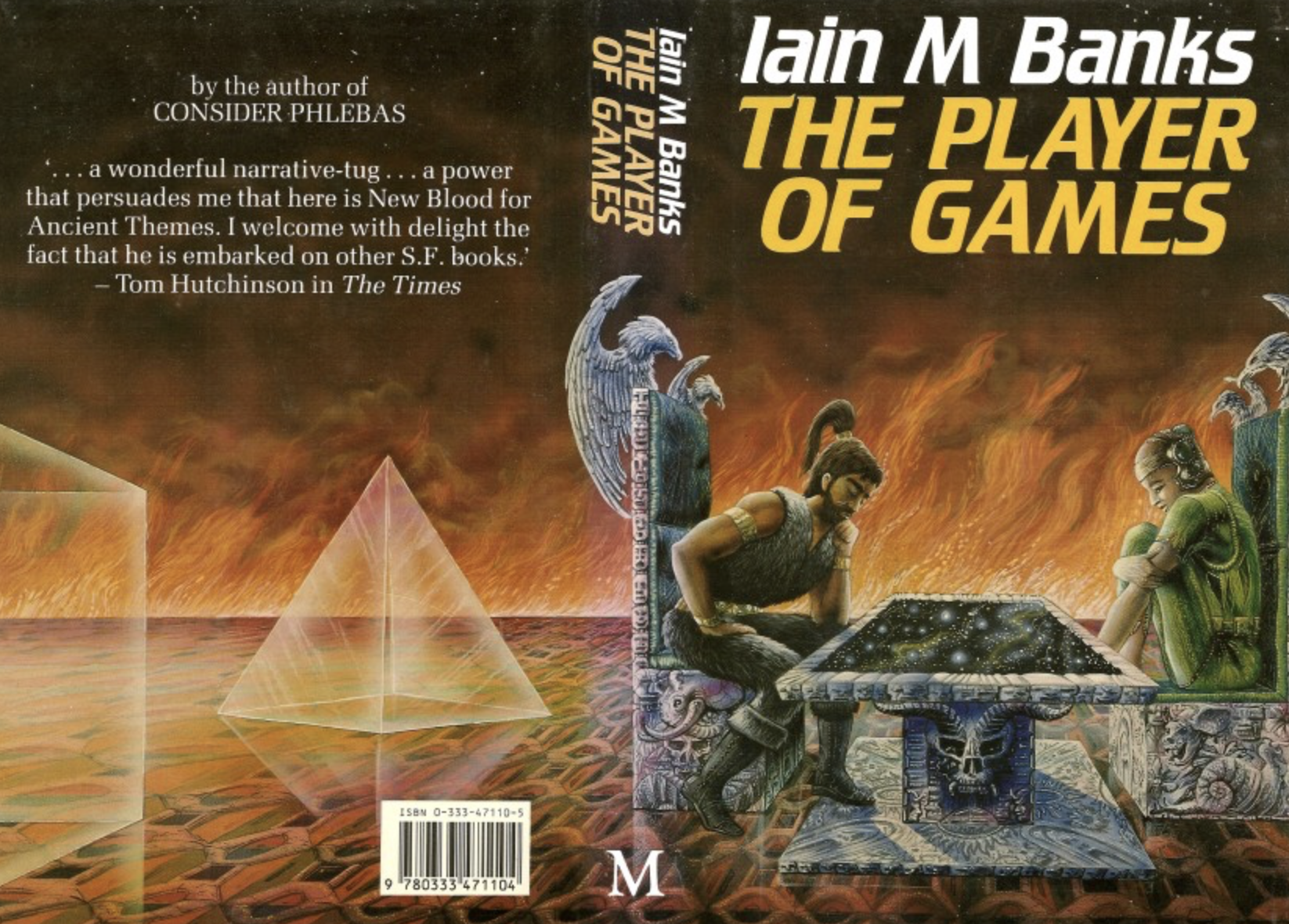





I reread The Player of Games by Iain M Banks and it was better than the first time
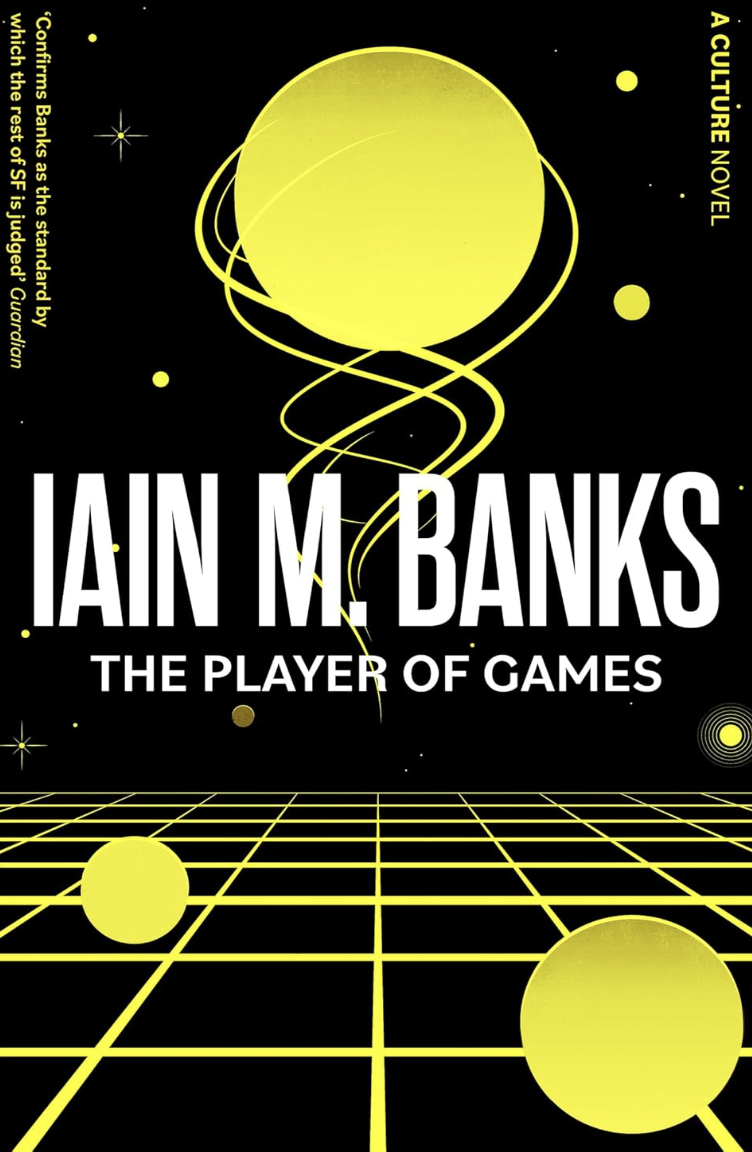
I first read The Player of Games by Iain M Banks in late 1990 and loved it. I then read Consider Phlebas which is fun but not quite as good, followed by Use of Weapons, which I enjoyed slightly more – but only just.
I think I slightly preferred Use of Weapons back then because I was desperate to read more about the Culture and in particular, Contact and Special Circumstances. And as if by magic, that was what book three of the series was all about. But maybe my opinion will change…
Because I loved this book and it is the perfect introduction to both the Culture and Iain M Banks.
What is the book about? A spoiler-free synopsis
The protagonist is called Jernau Morat Gurgeh, and he is the eponymous Player of Games. He is one of the best players in the multiple system spanning Culture. The man loves playing games, but he is growing a bit bored.
So when he hears about an Empire whose entire culture revolves around a ridiculously intricate and complicated game, he is intrigued. The Empire and the game are called Azad, and hierarchy within the Empire is predicated upon people’s ability with the game. Consequently, the best game player in Azad is the Emperor.
The Contact section of the Culture, which deals with aliens, persuades Gurgeh to take part in the tournament. He then spends a couple of years learning the game and travelling to Azad. His relationship with the game and the Empire shifts and develops the more he learns, and builds to an inevitable crescendo.
My review of The Player of Games – should you read it?
It is a great way to learn about the ‘Culture’
If you want to get into Iain M Banks’s Culture series, this is one of the best ways to start. It introduces the human and machine hybrid Culture brilliantly. It is run by powerful AI ‘minds’, and technology and robots are seamlessly integrated into society.
The Culture is a utopia that lets its people live a life free from crime, money, and any kind of concern about food, safety, health, and so on. Inhabitants can spend their time changing gender, getting drugged up, and generally enjoying things like creativity and playing games. They can alter their own brain chemistry at will, design new bodies, and live for centuries under the benign oversight of godlike AIs.
But they also get jealous and bored, and have all the ‘first-world problems’ humanity would still have to put up with.
There are broader, higher-level problems, such as aliens and how to deal with them. This is dealt with by Contact, and if necessary, a get-stuff-done division called Special Circumstances. The average person though, can live a long and chilled life – as can the personality-filled robots.
I’d love to live in the Culture.
It is a story that builds to an awesome crescendo and has great worldbuilding
There is an inevitable building tension in the story thanks to the tournament itself. As with any sports film, or even game-based show like The Queen’s Gambit, the tension mounts as the protagonist plays and the tournament sees players getting knocked out until the finals. The planet where the final games are played also has a built-in rising tension due to its natural cycle.
You also learn more about the reality of life in the Empire of Azad and how its citizens live. There is a believable contempt they have for the indolent lifestyles of the Culture, and the way the propaganda works is very realistic. They may see the Culture as depraved, but scratch the surface, and Azad is being a tad hypocritical. Its hierarchy reflects its brutality. The game encodes its values. It rewards aggression, dominance, and manipulation. It is not just a pastime. It is a mirror.
The worldbuilding and attitudes the two civilisations have toward each other are brilliant and explored against the background of the game.
The characters are great, even though the side characters don’t develop much
Gurgeh himself undergoes a good arc from vaguely bored to absolutely obsessed with Azad. Most of the other characters remain largely the same, filling a narrative role, but they are still superb characters. And some do have minor developments. The story is almost entirely from Gurgeh’s point of view, so I didn’t feel it impacted anything much.
And as I said, the people and drones are great and have believable lives. The robots, in particular, are a lot of fun and have genuine personalities. One of Gurgeh’s best friends is a 4000-year-old robot I would love to hang around with. His drone companion, Flere-Imsaho, often disappears to look at birds and is really into ornithology.
Even minor figures feel like they have lives beyond the page, which makes the political and cultural clash far more convincing.
Final thoughts
I loved The Player of Games. I’d initially read it long enough ago that I had forgotten nearly everything that happens in it. All I remembered was that I really enjoyed it. Which is a perfect combo for a reread.
The characters are great, and although some might find it slow at first, it builds and builds into something brilliant.
If you want to get into Iain M Banks’s Culture books, this is a superb place to start. But it is also a completely standalone book – and a great one. It is technically Book Two of the series after Consider Phlebas (which I liked), but this flows better and is from the Culture’s point of view. I’d even suggest reading that after The Player of Games.
Highly recommended.
You can check out The Player of Games here.
(This post contains affiliate links.)