
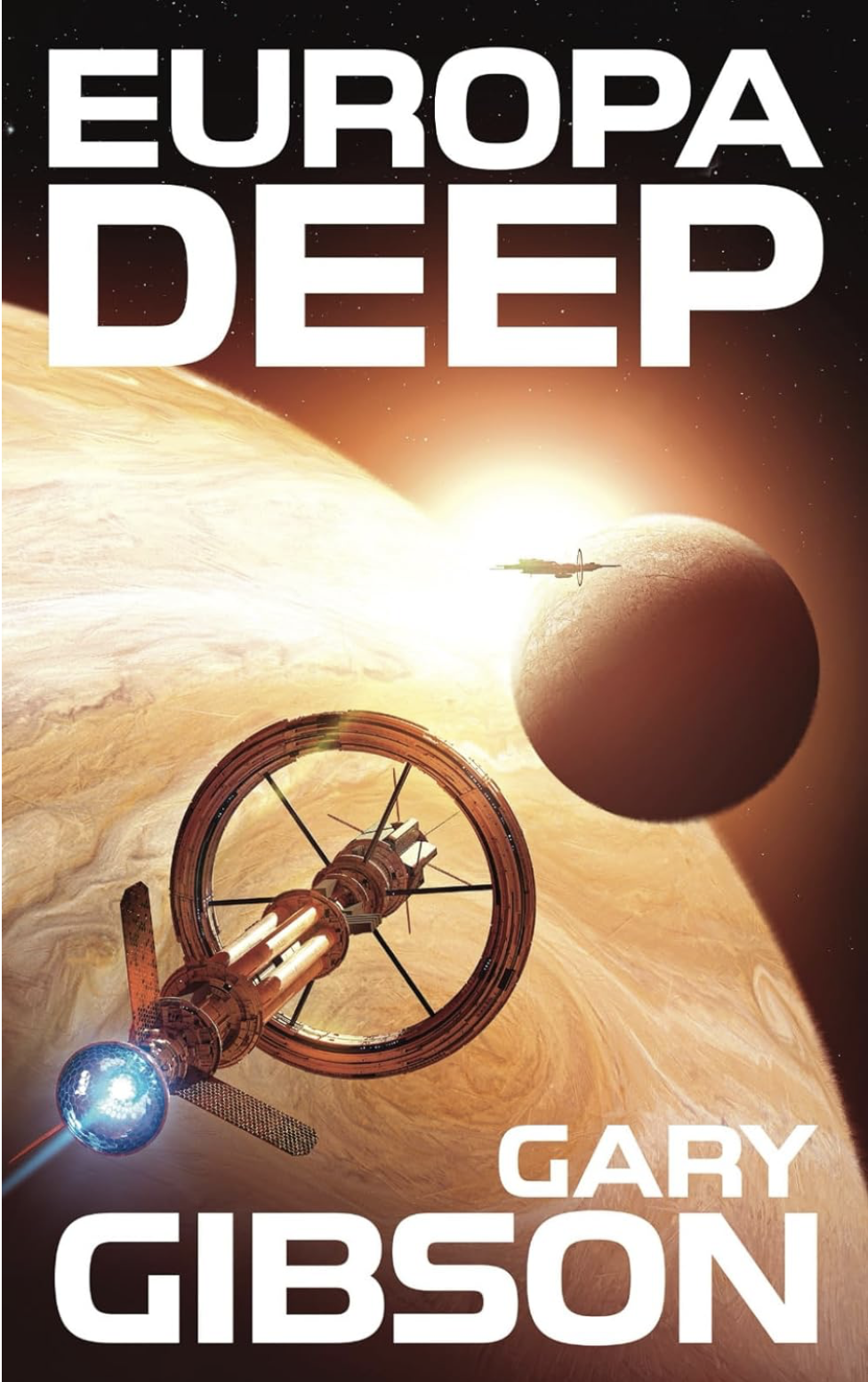






Europa Deep by Gary Gibson is an exciting sci-fi thriller
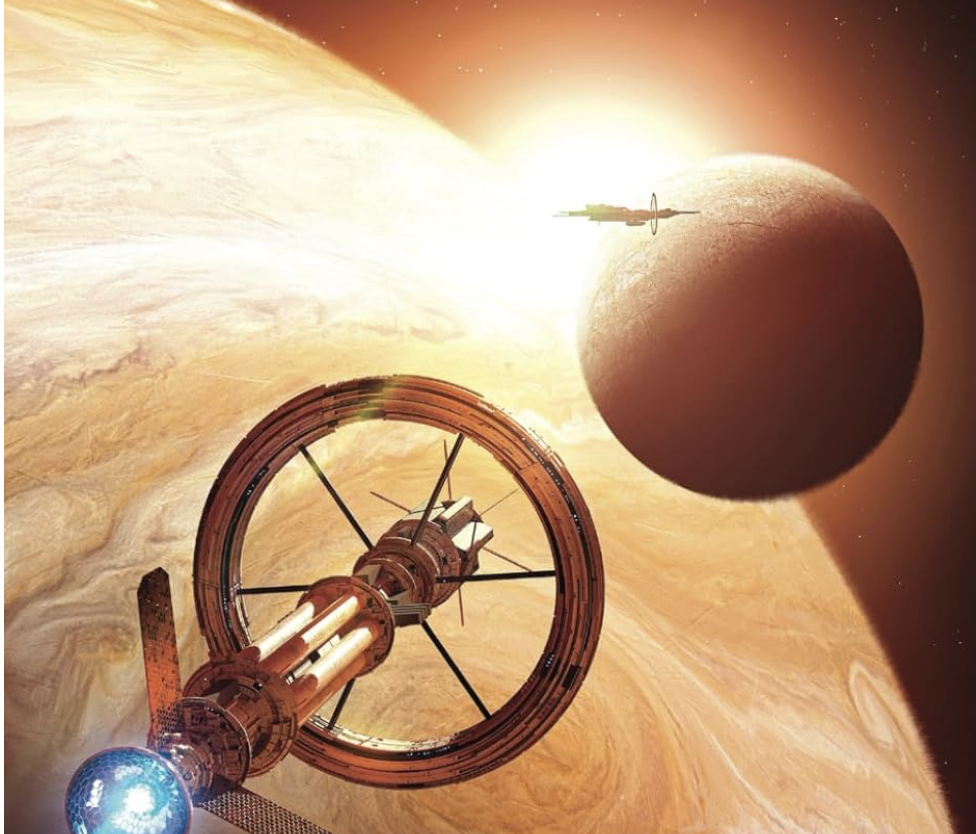
Europa is downright fascinating, and so when I saw a book entitled Europa Deep by Gary Gibson, I was immediately drawn to it. We know Jupiter’s ice-covered moon hides an ocean with hot vents inside, and so it is the most likely location for life in our solar system (apart from Earth, obviously).
What’s more, whatever is there would be deep-sea life. In the depths of our own oceans, there is a ton of weird stuff, so imagine what’s lurking on an alien moon? In reality, it will probably be mould or slime or something disappointing, but I am hoping for giant intelligent krakens or shoals of brains or something.
The point is, the idea of landing on Europa, drilling a hole, and going down in submarines is a fascinating concept. And as the title suggests, that is what Europa Deep by Gary Gibson is all about.
A brief, spoiler-free synopsis of Europa Deep
Gary Gibson’s novel follows a near-future mission to Europa, and its vast ocean hidden beneath kilometres of frozen crust. The protagonist, Cassie White, joins an expedition that is part rescue mission, part scientific exploration, part ‘we-need-to-get-there-before-some-else-does’.
There had been a previous expedition that had established a base and then vanished. Her brother had been on the first team, and so when Cassie gets a chance to join the second expedition, she jumps at the chance. Further complicating matters is that a rival nation is also on its way there, she has been hired in slightly dubious circumstances, the captain of the ship hates her because of prior events, and there are some saboteurs on board.
And if that is not enough, there is some weird stuff going on under the ice.
So there’s a lot going on.
A great setting and atmosphere
The near-future setting is well done and believable. The technology feels close enough to reality, the hazards of radiation and isolation are treated seriously, and the logistics of operating so far from Earth are well handled. It has a grounded believability that I appreciate in near-future science fiction.
The pacing is brisk and confident. Once the mission begins in earnest, the story keeps moving, and the descent into the Europan ocean is handled with a strong sense of atmosphere and ominousness.
There is a faint undercurrent of deep-sea horror running through Europa Deep. The sort of unease that comes from knowing you are surrounded by crushing pressure and endless dark. The whole thing felt realistically claustrophobic and foreboding. I’d love to go into space, but you can count me out of going under the ice of Europa.
I found the deep-sea sections particularly effective and tense. They tap into something primal about the ocean, even when that ocean is millions of kilometres from Earth. The idea that anything could be out there in the dark, observing, creates a constant tension. It is why I don’t like swimming out in the deep sea – something down there might be watching.
The characters and plot are mostly pretty good
The characters were all pretty solid and fleshed out. The emotional thread centred on the missing brother gives the expedition a human anchor. Without that, the novel might have risked becoming a purely technical exercise in exploration or a straight-up thriller in space. Instead, there is a personal urgency driving events, and a decent protagonist. Other characters are distinct from each other and have decent desires and emotions driving them on.
Europa Deep is a blend of sci-fi exploration and potential first contact, with elements of a thriller. All of which were woven together pretty decently. The thriller bits and the sci-fi deep-sea exploration bits aren’t really linked in any way – they both just kind of happen at the same time. The combination makes it more exciting, but I know from some of the reviews that not everyone was satisfied with how this was done.
I did feel at times that the book could have pushed its speculative ideas a little further. The set-up invites big questions about life, evolution, and humanity’s place in a wider cosmos, yet it tends to prioritise tension and forward motion over philosophical depth. It does explore some of these themes a bit, but I would have liked a bit more.
I read some other reviewers felt similarly, enjoying the ride but wishing the concepts had been explored with a bit more ambition. The ending also divided opinion. I found it satisfying enough, though I can see why some readers wanted a more expansive resolution.
Overall, I enjoyed Europa Deep. It delivers what I was hoping for when I opened it: a tightly written, scientifically grounded adventure set in one of the most intriguing corners of our solar system. It may not redefine the genre, but it understands the appeal of exploration, of diving into the unknown and seeing what waits in the dark. Well worth a read, especially if you have a weird Europa obsession like me.
You can check out Europa Deep by Gary Gibson here. (Affiliate link.)